Rabbit with Christmas Tree Review
As an experienced embroidery designer who has spent years refining designs for small business merchandise and branded patches, I approach every new file with a critical eye. When I first encountered the Rabbit with Christmas Tree design, my immediate thought was not just about its aesthetic appeal, but how it would translate into a tangible asset for a growing brand. This machine embroidery design promises to be a versatile tool for creating Christmas-themed projects, including apparel, home decor, tote bags, and accessories. But does it hold up under the scrutiny of commercial production? Let's dive into a professional review of how this embroidery file can serve your specific business needs.
First Impressions: Personality and Professionalism
The title alone suggests a blend of whimsy and tradition. For a small business owner looking to add a festive touch without sacrificing brand identity, the visual personality of Rabbit with Christmas Tree is crucial. In the world of custom apparel, a design must strike a balance between being friendly enough to attract customers and professional enough to build trust. This design appears to offer that duality. It feels playful yet structured, making it suitable for brands that want to project a warm, handmade image while maintaining a polished look.
When evaluating any digital embroidery file for commercial use, the first step is assessing the stitch density and outline clarity. A design that looks good on a screen often fails when stitched onto fabric if the details are too fine or the spacing is too tight. Based on the description, this piece seems designed for variety, suggesting it might have a balanced composition that works well as a central logo accent or a subtle detail. The potential for this embroidered patch to become a recognizable symbol for your shop depends heavily on how well these elements render in real-world conditions.
Real-World Business Applications
The true test of any design lies in its application across different product categories. Imagine a local café or a boutique bakery wanting to launch holiday merchandise. Rabbit with Christmas Tree could serve as the star of a limited-edition collection. Here is how this design fits into various small business merch scenarios:
- Embroidered Patches: One of the most popular uses for seasonal designs is creating iron-on or sew-on patches. These can be applied to denim jackets, backpacks, or aprons sold at craft fairs. If the design holds its shape at a smaller scale, it becomes a high-margin item for Etsy sellers and online stores.
- Staff Uniforms and Aprons: For bakeries, florists, or pet brands, adding a festive element to staff uniforms creates a cohesive team look. Placing Rabbit with Christmas Tree on the chest of a work shirt or as a pocket accent on an apron embroidery project adds a personal touch that customers appreciate.
- Tote Bag Design: Tote bags are a staple for handmade brands. This design offers a perfect opportunity to create reusable shopping bags that double as marketing tools. When customers carry a bag featuring your unique brand identity, they become walking billboards for your shop.
- Cap Embroidery: Caps are excellent for event merch or corporate gifts. The circular nature of cap fronts requires careful consideration of design placement, but a well-executed Rabbit with Christmas Tree can make a statement on a baseball cap or beanie.
- Product Packaging Accents: Beyond clothing, this design can be used on product labels or tags attached to handmade goods, reinforcing the handmade product narrative.
Navigating Technical Challenges
While the potential is high, there are specific areas where Rabbit with Christmas Tree requires careful handling. Not all surfaces are created equal, and certain applications demand extra caution to ensure the finished product meets quality standards.
Small Patch Sizes: If you plan to produce small patches, you must verify that the design does not lose definition. Tiny lettering or intricate outlines within the rabbit or tree may blur together if the stitch count is too low or the fabric texture is too coarse. Always test the design at the intended final size before running a full production batch.
Curved Surfaces: Embroidering on the front of a cap or a rounded tote bag handle presents challenges. The curvature can distort the design if the hoop size and stabilizer choice are not optimized. You need to ensure that the stitch density is appropriate for the fabric tension required by curved items.
Fabric Texture and Color: Dark uniforms or textured fabrics like heavy wool or denim can hide the details of a design. If the thread colors do not provide sufficient contrast against a dark background, the Rabbit with Christmas Tree may appear muddy. Conversely, on light fabrics, ensure the outlines are bold enough to stand out. Frequent washing is another factor; designs with high stitch counts or loose threads may pill or fade faster than simpler graphics.
Impact on Brand Identity and Customer Trust
In the competitive landscape of handmade products and digital assets, visual consistency is key. Using a high-quality commercial embroidery design like this one signals to your customers that you care about the details. A crisp, well-stitched logo on a tote bag or uniform builds credibility. It tells the buyer that your business is established and professional.
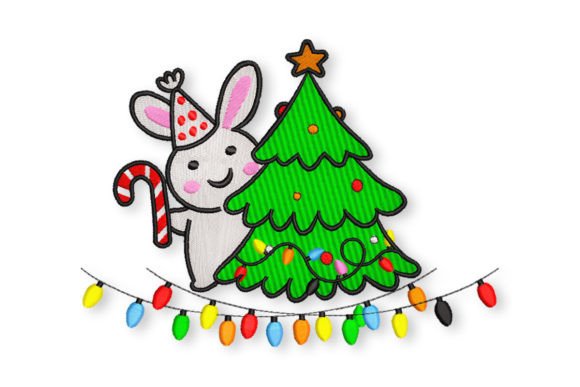
Furthermore, a unique design contributes to brand identity. If Rabbit with Christmas Tree becomes synonymous with your holiday line, it fosters customer recognition. People remember visual stories, and a charming rabbit holding a tree creates an emotional connection that generic clipart cannot match. This engagement drives repeat purchases and strengthens the perceived value of your product designers offerings.
Essential Designer Notes for Production
Before you commit to mass production, follow these practical steps to ensure success with your embroidery design:
- Test in Black and White: Convert the design to grayscale to check the contrast and balance of stitches. This helps identify areas that might be too dense or too sparse.
- Check Small Scale Performance: Run a test stitch at the smallest size you intend to use. Ensure the details remain legible and the edges are clean.
- Review Thread Colors: Select thread colors that complement your brand palette. High contrast is usually best for visibility, but harmonious tones enhance the design assets.
- Inspect Spacing and Hoop Size: Confirm that the design fits within your standard hoop size and allows for adequate border spacing to prevent puckering.
- Test on Real Fabric: Do not rely solely on mockups. Stitch the design on the actual fabric you plan to use to see how the fabric texture interacts with the stitches.
- Use Proper Stabilizer: The right stabilizer is critical for maintaining the shape of the design, especially on stretchy or delicate materials.
- Create a Printable Mockup: Use a printable mockup to show clients or stakeholders how the design will look on the final product before spending time on physical samples.
- Compare with Other Assets: Place the design beside your other branding elements to ensure visual consistency across your entire product line.
- Confirm Commercial Licensing: Most importantly, verify that you have the correct license for commercial embroidery use. Check the terms provided with the file to ensure you are allowed to sell products made with this design.
By treating Rabbit with Christmas Tree as a strategic business tool rather than just a decorative element, you can maximize its potential. Whether you are creating custom apparel for a holiday pop-up or producing long-term branded merchandise, this design offers a strong foundation for your creative vision. Just remember to prioritize testing and quality control to deliver a finished product that reflects the highest standards of your craft.