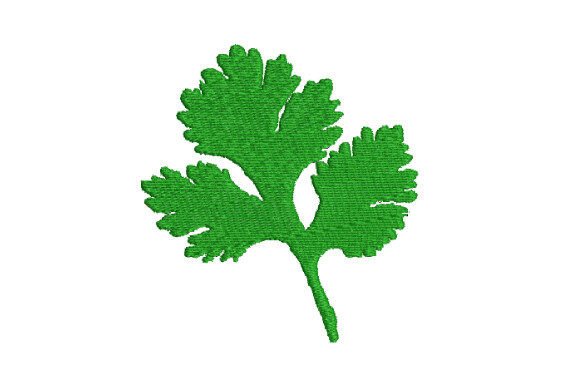
Coriander Embroidery Design Review
As an experienced embroidery designer who has spent years refining designs for commercial use, I recently had the opportunity to review Coriander, a machine embroidery design categorized under Food. When evaluating a digital embroidery file for small business merchandise, branded patches, and custom apparel, we are not just looking at aesthetics; we are assessing durability, brand impact, and production viability. My initial impression of Coriander is that it strikes a perfect balance between rustic charm and professional polish. The name itself evokes freshness and organic quality, making it an ideal candidate for bakeries, cafes, boutique food brands, and handmade product lines.
The First Impression: Personality and Brand Fit
The moment you open the file for Coriander, the visual personality jumps out. It feels friendly yet grounded, suggesting a brand that values authenticity over flashiness. For a small business owner or Etsy seller, this design offers a "handmade" presentation without sacrificing the clean lines required for high-quality finished products. Whether you are creating a logo accent for a chest pocket or a statement piece on a tote bag, Coriander brings a sense of warmth that resonates with customers looking for artisanal goods.
In the context of embroidery as a branding tool, the design appears versatile enough to serve as a primary mark or a subtle detail. It avoids being overly decorative or fussy, which is crucial when the goal is to create a recognizable symbol that can be reproduced across various mediums. If your brand identity relies on trust, professionalism, and a touch of elegance, this design asset aligns well with those values.
Real-World Application for Small Business Merch
When I imagine deploying Coriander in a real-world business scenario, several exciting possibilities emerge. Let us consider a local café or a specialty bakery. They could utilize this embroidery file to create staff uniforms that feel cohesive and inviting. Imagine an embroidered patch featuring Coriander stitched onto the breast pocket of a chef's coat or the apron embroidery on a barista's uniform. This level of detail elevates the perceived value of the service and fosters a sense of team pride.
For retailers and crafters, the potential extends beyond clothing. A tote bag design featuring Coriander would make for excellent customer gifts or event merch. These bags serve as mobile advertisements, walking through markets and streets while promoting the brand. Similarly, for a florist or pet brand, this design could act as a charming label on product packaging accents or a tag attached to gift baskets. The versatility mentioned in the description—suitable for t-shirts, pillows, hats, handkerchiefs, and many other projects—confirms its utility as a comprehensive solution for digital embroidery file buyers.
Furthermore, for those selling printable mockups or preparing files for client approval, Coriander provides a strong foundation. You can easily visualize how the stitch density and thread colors might look against different fabric textures. It works particularly well as a cap embroidery design, where a compact, bold motif stands out against the curved surface of the hat.
Navigating Production Challenges
While the design shows great promise, every professional knows that execution is key. There are specific areas where Coriander requires careful consideration before mass production. If you plan to use this for an embroidered patch, you must test it at small patch sizes. Designs that look stunning on a large hoop often lose their definition when scaled down. Pay close attention to detailed outlines and tiny lettering if they exist within the file; these elements can become muddy if the stitch count is too low or the spacing is too tight.
Curved surfaces like caps present another challenge. The way the design lays on a flat piece of fabric may differ significantly from how it sits on a rounded cap front. High stitch density can also cause puckering if the wrong stabilizer is used or if the fabric texture is too loose. Additionally, if you intend to embroider this on dark uniforms, you will need to evaluate the thread color contrast carefully to ensure the design remains legible and vibrant.
Frequent washing is another factor to keep in mind. Items like work shirts and aprons undergo rigorous cleaning cycles. You must confirm that the design structure holds up over time without fraying or losing its shape. Testing on real fabric samples is non-negotiable here. Do not rely solely on screen previews; physical testing reveals how the threads interact with the material.
Strategic Impact on Brand Identity
Beyond the technical aspects, using a design like Coriander has profound effects on brand identity and customer engagement. In a crowded marketplace, consistency is king. When a customer sees the same high-quality embroidery on a tote bag, a hat, and a product label, it reinforces the message of reliability and attention to detail. This visual consistency builds buyer engagement and fosters long-term loyalty.
A well-executed design signals that the business cares about quality. It transforms a simple commodity into a premium item. For instance, a bakery selling cookies with a Coriander-branded tag creates a memorable unboxing experience. The tactile nature of embroidery adds a layer of sophistication that printed labels simply cannot match. This distinction is vital for handmade brands looking to justify higher price points and establish themselves as leaders in their niche.
Practical Designer Notes for Commercial Use
Before committing to a full production run, I recommend following a strict workflow to ensure success. First, test the design in black and white to check the structural integrity and spacing without the distraction of color. Next, verify the hoop size requirements to ensure your equipment can accommodate the design dimensions comfortably.
Thread color selection is critical for visual impact. Choose colors that complement the fabric texture rather than fighting against it. Always inspect the spacing between stitches to prevent clumping. Creating a high-resolution printable mockup for client approval is also a smart step; it allows stakeholders to see the final result before any money is spent on materials.
Finally, do not overlook the importance of comparing this design asset beside other existing logos or graphics to ensure visual harmony. Most importantly, confirm commercial licensing terms before using Coriander for business purposes. Ensure you have the legal right to sell items bearing this design, whether as a standalone product or part of a larger collection. If specific details regarding exact stitch counts, file formats, or license terms are not provided in the product listing, advise your team to contact the creator or check the documentation thoroughly before proceeding.
By approaching the Coriander design with this level of scrutiny and strategic planning, small business owners and embroidery shops can transform a simple digital file into a powerful tool for growth. It is more than just a pattern; it is a statement of quality, a marker of brand identity, and a testament to the artistry of commercial embroidery.